Why the Cheapest Commercial Fitness Equipment Quote Is Usually the Most Expensive
Last year, I replaced three treadmills in two different locations. The first quote I received was $2,300 lower than the second. I was ready to sign. Then I ran the numbers on delivery, rigging, required maintenance, and parts availability. The “cheap” option would have cost us $1,100 more over two years. I'd have never known it from the spec sheet.
I'm the procurement manager for a regional health club group. I've managed an equipment and maintenance budget north of $400,000 a year for six years, negotiated with more than 30 vendors, and logged every order in a cost tracking system that doesn't care about feelings. This is why I stopped buying on price.
The Problem Isn't the Price—It's What the Price Hides
If you're reading this, you've probably done the same thing: search for matrix fitness equipment images to compare looks, compare a few spec sheets, and go with the lower quote. That's not stupid. It's how most purchasing decisions work. But a fitness equipment quote is not a total cost. It's a starting point.
Let me give you a simple example. Say you need a running treadmill. Vendor A quotes $5,200. Vendor B quotes $6,400 for the same category of machine. On paper, the motors look similar and both have a 3-year warranty. But Vendor A's quote doesn't include the $800 shipping and rigging charge, and the warranty requires two preventive maintenance visits per year at $300 each. Over two years, that's $1,200. So Vendor A's real cost is $7,200. Vendor B's quote includes shipping and two years of preventive maintenance. Total: $6,400. The lower quote is $800 more expensive. And that's before you consider downtime.
Why Sticker-Price Shopping Feels So Logical
There's a reason this keeps happening. Our brains are wired to compare the number at the bottom of the quote. It's a no-brainer reflex. Plus, salespeople know it. They'll lower the unit price and make up the margin in installation, freight, or “mandatory” service plans. The deeper issue is not the sales tactic—it's that most buyers compare the wrong attributes.
Nobody asks about service access. Nobody asks whether the dealer stocks parts for the Matrix Fitness smith machine you're considering, or how long it takes to get a replacement running treadmill deck. We compare horsepower, screen size, and whether the machine looks good. Those things matter, but not as much as the cost per operating hour.
There's also an old belief that “commercial” equipment is just residential gear with a heavier paint job. That was true in some categories twenty years ago. Real commercial equipment today is built differently—bigger bearings, stronger welds, replaceable wear parts. But “light commercial” blurs that line. If a product page says light commercial, I treat it as a red flag. It probably means the price is lower and the lifespan is too.
The Real Cost of Getting It Wrong
In Q2 2024, we added strength equipment to a hotel gym. The budget was tight, and I went with a dealer whose only advantage was a lower price. I didn't check the service radius. When a guide rod bent during installation, the replacement part took nine days to arrive. The hotel lost one corporate account because the guest needed a gym with a running treadmill and couldn't wait. The “savings” from that order disappeared.
Our maintenance manager warned me about that dealer the same day. I didn't listen. I only believe in total cost of ownership now because I got burned. Actually, let me be fair: I got burned once, and every purchase since has gone through the same spreadsheet. (I built that spreadsheet after getting hit with a “setup fee” that wasn't a setup fee. It was a calibration charge. No one mentioned it during the sales call.)
Total cost of ownership sounds like finance jargon, but it's basically simple. It's the invoice amount plus:
- delivery, rigging, and installation
- required preventive maintenance
- expected repairs and replacement parts
- downtime lost-opportunity costs
- how fast you can get a tech on-site
Everything I'd read about buying equipment said to focus on warranty length. In practice, I found a longer warranty isn't worth much if the repair person takes two weeks to show up. The best warranty is a local parts pipeline and a dealer who answers the phone.
Another thing I've learned is to consider how your staff will actually use the equipment. If your strength floor is built around movements like RDLs with dumbbells and your coaches are debating barbell row vs pendlay row, the bars and plates will get dropped, loaded, and abused in ways the marketing photo won't show. That's not a reflection on the equipment. It's a reflection on whether you've bought gear designed for the reality of a commercial floor.
How I Buy Now (Without Becoming a Nuisance)
So what actually changed? I use a TCO checklist before I compare quotes. And I ask four questions:
- What is the total installed cost, including rigging and any required first-year service?
- What are the common failure points for this model, and are replacement parts available in my region?
- What conditions in the warranty could void coverage? (like mandatory monthly maintenance)
- If the machine is down, what's the realistic time-to-repair?
I also ask for a live demo. Photos and matrix fitness equipment images? Well, images are useful for the shortlist, but they can't tell you if the console is slow or if the belt track self-centers. A demo can. And I always ask to see the service manual before I sign. If the dealer won't share it, that's a deal-breaker.
I've bought from Matrix Fitness and I've bought from other commercial brands. The brand matters less than the relationship and the duty rating. What I look for is a supplier who will answer the questions above without getting defensive. That's the kind of vendor you can build a maintenance plan around.
Bottom line: price is an input, not the answer. The real cost of commercial fitness equipment is what it takes to keep it running—not what it costs to set it in the room. If you change nothing else, run your next purchase through a total cost of ownership calculation. Your equipment budget will thank you. So will your maintenance team, and so will the person holding dumbbells at 6 AM.
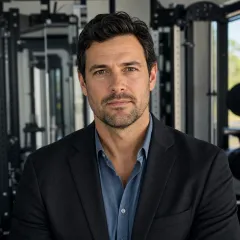
Marcus Feldman
Marcus Feldman is a commercial strength-equipment analyst covering selectorized machines, plate-loaded stations, Smith machines, functional trainers, power racks, benches, barbells, dumbbells, and cable systems. He applies ISO 20957-1 and ISO 20957-2 while comparing rated loads, stability, frame deflection, pulley ratios, cable travel, adjustment increments, guarding, entrapment points, fastener retention, and fatigue cycles. His guides help gym operators, coaches, facility planners, and procurement teams evaluate biomechanics, user capacity, floor layout, maintenance access, durability, and lifecycle value.