Most Gym Equipment Mistakes Aren't Budget Mistakes—They're Efficiency Mistakes
I believe most gym equipment purchasing mistakes aren't budget mistakes. They're efficiency mistakes. That conclusion cost me roughly $32,000 to reach.
Quick background: I've handled equipment procurement and maintenance for a mid-sized commercial fitness facility for six years. In that time, I've personally made—and documented—11 significant purchasing errors. Total wasted budget: around $32,000. Now I maintain our team's equipment checklist, and I write about these failures because I'd rather you skip the expensive part.
The checklist isn't about price. It's about efficiency. Efficiency of maintenance, of training, of member experience—everything. Here's the thing I learned after all those failures: the equipment itself was rarely the problem. The problem was how I thought about buying it. I treated each purchase as a standalone transaction, a one-time decision about a single machine. That's the wrong mental model. Every equipment decision is really a decision about how your facility will operate for the next five to ten years. The machine is just the most visible part.
Mistake #1: I Bought Cheap Bikes (Then Paid Twice)
In 2017, I ordered twelve indoor cycles from a brand I'd never heard of. Price per unit: less than half of what a Matrix fitness bike cost. On paper, I was a procurement genius. In practice? Not quite.
The first wobble appeared in month three. By month seven, three bikes had blown bearings and two more had resistance systems that felt like sandpaper. Members stopped using the "broken bikes"—then stopped trusting the entire cardio section. I tried selling the dead units on the used market and got pennies on the dollar. It was a lesson in total cost of ownership that I didn't even know I was being taught.
I'm not an equipment engineer, so I can't speak to bearing tolerances or frame welding specs. What I can tell you from a facilities management perspective: the cheap bikes failed within the first year, repairs consumed roughly three hours of staff time per week (unfortunately), and member complaints ate more time than the repairs.
I went back and forth between replacing them with Matrix bikes and trying another budget option for two weeks. Budget said cheaper. My spreadsheet said otherwise.
The Matrix fitness bikes we eventually bought cost more upfront. But over the next 18 months, our repair costs for those bikes were zero. Zero. Downtime dropped to nothing. Members stopped complaining. The math was embarrassingly simple: the "budget" bikes cost about $190 per month in repairs and lost goodwill. The Matrix bikes cost… nothing.
Not ideal. Expensive mistake, actually. But a useful one.
Mistake #2: I Almost Missed the Planet Fitness Lesson
Around 2019 (circa then, at least), a friend who worked at Planet Fitness invited me to tour her location. I walked in expecting the usual big-box gym vibe. What I noticed instead was the uniformity.
Matrix treadmills. Matrix ellipticals. Matrix stair climbers—the ClimbMill is what Matrix calls them, though members just say "stairmaster" (which technically is a different brand, but language is what it is). The same lineup, arranged the same way, across every location they operated.
That's when it hit me: standardization is efficiency. When every location runs the same equipment, maintenance teams need one set of procedures. Staff training applies everywhere. Replacement parts are predictable. The equipment choices were deliberate, not decorative.
I'd been buying whatever was on sale from a rotating cast of vendors. Different controls, different warning labels, different quirks. Look, I thought I was being flexible. I was actually building my own operational nightmare.
This gets into equipment ecosystem design, which is a whole discipline I'm still learning. But from a management perspective: every different brand you add multiplies your training, parts inventory, and troubleshooting complexity. Planet Fitness standardized for a reason.
Mistake #3: I Assumed the Equipment Would Teach Itself
The mistake nobody budgets for? Assuming members and staff understand the equipment in front of them.
A member once asked me: "What is incline dumbbell press?" My first thought: "Do we not have the right benches?" We did. The incline dumbbell press is a simple exercise—dumbbells pressed upward from an adjustable bench set to a 30–45 degree incline, shifting emphasis to the upper chest. I can explain it in one sentence. Our staff couldn't.
The same went for overhead dumbbell extensions (lowering a dumbbell behind your head to target the triceps) and the decline chest press machine (a pressing movement on a decline angle, good for lower chest work and heavy volume without a spotter). All basic strength training vocabulary for someone who knows the craft. But if you've never been trained on it, it's all noise.
We had the iron. We had the machines. We didn't have the knowledge transfer. That's an efficiency problem, not just a training problem.
What finally worked was a single two-hour session where we walked every floor staff member through the main stations: how to adjust them, what muscles they target, and how to explain them to a curious member. We did that in April 2023. Member questions dropped dramatically, and equipment usage on our strength floor actually went up. Who knew.
Honestly, I'm not sure why equipment purchases and staff education are treated as separate budget lines in most gyms. My best guess: equipment is tangible; training is not. But a decline chest press machine that nobody can explain is a very expensive piece of decor.
But Wait—What About Budget?
Some will say: "Easy for you to write this. Not everyone can afford commercial-grade equipment." True. I respect that.
But here's the thing: efficiency thinking changes the question. The question isn't "Can I afford this piece?" It's "What does this piece cost over its lifetime?"
A decline chest press machine that costs twice as much but lasts three times longer is the cheaper purchase. A pair of Matrix fitness bikes that run for years without breaking is cheaper than a fleet of discount bikes that eat your maintenance budget. The upfront price is one number. Total cost of ownership is the real number.
I'd also argue the digital side of efficiency matters here. Connected equipment—like Matrix's Connexus consoles—eliminated the manual workout logging errors we used to deal with. That's not a luxury. That's reduced labor, fewer member disputes, and cleaner data. Automation didn't just add convenience; it removed a class of mistakes we'd been living with for years.
Commercial-grade equipment is typically tested for continuous use—think 12+ hours per day—while consumer equipment is usually rated for an hour or two. I'm not 100% sure of every testing standard, but the usage assumption alone explains why consumer-grade machines tend to fail in commercial settings.
And if budget is genuinely tight, consider used commercial equipment before buying new consumer-grade stuff. It's a middle path I wish I'd known about in 2017.
Efficiency Is the Purchase
I'm not saying every gym needs a full row of Matrix equipment or a planet-sized budget. I'm saying my failures weren't because I bought the wrong brands or spent too little. I failed because I evaluated pieces instead of systems.
Next time you budget, ask different questions:
- How much staff time will this equipment consume—per month, per year?
- What does the maintenance history look like, not just the warranty?
- Can our team train members on this without specialized instruction?
- Are we moving toward a standardized fleet or away from it?
I maintain a checklist built from those questions now. It's caught at least 18 potential bad purchases in the past two years. The budget it's saved? Roughly equal to what I wasted before, I'd estimate around $30K. (Take that with a grain of salt.)
Efficiency is the purchase. The equipment is just the delivery vehicle. That lesson cost me $32,000. I'd rather you learn it for free.
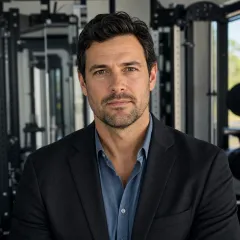
Marcus Feldman
Marcus Feldman is a commercial strength-equipment analyst covering selectorized machines, plate-loaded stations, Smith machines, functional trainers, power racks, benches, barbells, dumbbells, and cable systems. He applies ISO 20957-1 and ISO 20957-2 while comparing rated loads, stability, frame deflection, pulley ratios, cable travel, adjustment increments, guarding, entrapment points, fastener retention, and fatigue cycles. His guides help gym operators, coaches, facility planners, and procurement teams evaluate biomechanics, user capacity, floor layout, maintenance access, durability, and lifecycle value.