I Buy Commercial Fitness Equipment for a Living. Stop Comparing Sticker Prices.
Here's a take that doesn't make me popular in budget meetings: the cheapest commercial fitness equipment on a quote is almost never the cheapest machine you'll own. Not sometimes. Not in rare cases. The real costs just show up later.
I've managed fitness equipment purchasing for corporate wellness centers since 2020. Today that means three locations and around 400 employees who expect the gym to be open when they arrive. I report to both operations and finance, so I watch one side push for lower capital spending while the other side pushes for zero downtime. Those two goals fight each other constantly. The only honest way I've found to reconcile them is to stop looking at the sticker price and start looking at total cost of ownership (TCO).
What a “good deal” taught me
My TCO education started with a mistake. In 2021, we needed six treadmills for one of our centers. I compared quotes from three vendors, checked the spec sheets, and recommended the cheapest option from a recognizable commercial brand. The specs looked basically identical to the more expensive units: same motor class, similar deck, comparable warranty. The price was about 15% lower per machine. I thought I was being a responsible buyer.
Month 13 was when the first drive board failed, one month after the warranty expired. I called it bad luck. Then a second unit needed belt and roller work in 2023. By early 2024, three of the six treadmills had service tickets. When I sat down and added the invoices, the savings were gone. I don't have an exact total in front of me because our accounting system changed in 2024, but the amount was enough to erase the discount completely.
That's the problem with buying on price alone: you don't lose the money all at once. You lose it in small invoices over two or three years.
Maintenance is part of the price
Nobody warns you about the maintenance line when you're negotiating a purchase. Treadmills require routine care. The belt and deck need to be lubricated on a regular schedule, usually measured in operating hours rather than calendar months.
Some people look up how to apply treadmill lubricant and think that's the whole story. The procedure is straightforward: lift the belt, spray silicone lubricant across the deck, and let the belt run slowly for a minute to spread it. Not complicated. But if you operate a room with fourteen treadmills, simple becomes time-consuming. Each unit needs to come out of service, and the labor adds up. The lubricant itself costs very little. The labor and the lost workout time are the real expenses.
These days, I evaluate serviceability before I compare price. The Matrix Fitness official website, for example, publishes owner's manuals, maintenance schedules, and warranty terms for its treadmills, ellipticals, and strength equipment. I want to know how long spare parts will stay available and whether routine service requires a certified technician. If that information is hard to find, I treat it as a red flag.
The dumbbell lesson
Here's something that might surprise you: some of the lowest-TCO equipment in our gyms has no motor at all. Our dumbbell area gets heavy daily use and costs almost nothing to maintain. If a member asks what to do for back work, I point them to a pair of dumbbells and a bench. A dumbbell row builds the same muscles that many people would use a cable machine for, and it doesn't depend on cables, pulleys, or electronics.
You can create a complete back day with just free weights: one-arm dumbbell rows, bent-over rows, and reverse flyes. Back exercises with dumbbells have zero scheduled maintenance, which is more than I can say for most powered equipment. That doesn't mean strength machines are useless. It means the lowest-cost option to operate is sometimes the lowest-tech one, and that is a legitimate purchasing strategy.
Watch what runs all day
I used to trust spec sheets too much. Now I trust usage patterns. In 2024, I toured a Planet Fitness location and stood at the edge of the cardio floor for a while. Matrix treadmills were running from early morning to late evening, and the room stayed busy. A Matrix treadmill at Planet Fitness works harder in a day than most hotel fitness treadmills work in a week. That tells me the machines are built for constant operation, and the operator believes the long-term cost works.
That experience also changed how I think about vendors. Large operators don't keep equipment around out of brand loyalty. They track repair costs and downtime, and they replace machines that hurt the bottom line. Seeing the same brand across multiple high-volume gyms is one of the most useful reliability signals a buyer can get.
But what if the budget isn't there
I know what you're thinking: easy for you to say. My budget won't stretch to premium equipment. I've been in that position, and I'm not telling you to overspend on features you don't need. The priciest machine isn't automatically the right one. But for a commercial space, you have to ask how many hours per day the machine will actually run.
If the answer is constantly, a low-cost treadmill isn't a cost-saving decision. It's a gamble, and the operating budget will pay for it one repair invoice at a time. Buying one fewer machine, or phasing the purchase across two fiscal years, is usually better than buying machines that can't survive the workload. I'm not saying every buyer should choose high-end. I am saying the decision to buy cheaper should be based on expected usage and expected lifetime, not just on the cash available this quarter.
Stop asking which one is cheaper
If I've learned anything in this role, it's this: the first question in a purchasing conversation shouldn't be which one is cheaper. It should be what will this equipment cost to operate over its lifetime. I don't have hard data on every brand in the market, but I have service tickets, maintenance logs, and five years of invoices. That's enough to know I won't repeat my 2021 mistake.
Comparing sticker prices is easy. Comparing total cost of ownership is uncomfortable because it forces you to think about downtime, service, labor, and a future you can't fully predict. But that's exactly why it works. Buy equipment you can afford to run, not just equipment you can afford to buy.
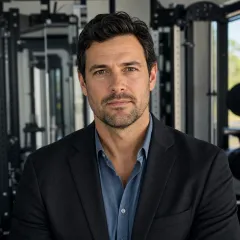
Marcus Feldman
Marcus Feldman is a commercial strength-equipment analyst covering selectorized machines, plate-loaded stations, Smith machines, functional trainers, power racks, benches, barbells, dumbbells, and cable systems. He applies ISO 20957-1 and ISO 20957-2 while comparing rated loads, stability, frame deflection, pulley ratios, cable travel, adjustment increments, guarding, entrapment points, fastener retention, and fatigue cycles. His guides help gym operators, coaches, facility planners, and procurement teams evaluate biomechanics, user capacity, floor layout, maintenance access, durability, and lifecycle value.