Treadmill vs Stairmaster Is the Wrong Question for Commercial Gym Buyers
Last spring, one of our property managers asked me what he clearly thought was the smart procurement question.
“Treadmill vs stairmaster. Which one goes on the purchase order?”
I understood why. Type that phrase into Google and you’ll find hours of content about calorie burn, impact load, and glute activation. He was opening a new location in nine weeks, and the budget didn’t cover every machine he wanted on the cardio floor.
But the question rests on an assumption that doesn’t survive contact with real operations: that there’s one right answer for every gym. I can say that with confidence because I almost cost us an opening by thinking that way in 2022.
The machine question hides the data that actually matters
When I took over equipment purchasing in 2020, I fell into the same trap. I compared treadmill specs to stair climber specs. I debated treadmills versus stationary exercise bikes. I built spreadsheets full of motor horsepower and belt widths. I was solving the wrong problem.
Here’s the thing: no commercial machine is better in the abstract. There are only machines your members will actually use, and machines they’ll try once before moving on.
It’s tempting to think the answer is “buy whatever burns the most calories.” That advice ignores a critical nuance: a stair climber only burns calories while someone stays on it. In our facilities, the average stair session lasted about 11 minutes. Treadmill sessions averaged more than 30. The stationary exercise bike landed somewhere between the two in session length, but it earned its floor space through consistency: steady usage all year, especially from January through March.
When we pulled utilization data from six locations, treadmill usage ran about four times higher than stair use. That’s not a verdict on which machine is “better.” It’s just what our member base does. In a facility serving a different crowd—say, younger members who already like climbing—the numbers could flip.
I can only speak to my own operating context. We manage 18 fitness centers across a mixed portfolio: corporate gyms, hotel fitness rooms, and two public clubs. If you’re opening a boutique studio, your logic will probably look different. That’s the point: the old question tries to force a universal answer where none exists.
The deeper mistake: comparing price instead of risk
Once the machine mix is settled, the next layer hits. And it costs real money.
In early 2022, we were outfitting a 12,000-square-foot club in the Austin area. Two commercial brands made it to the final round. One came back dramatically cheaper—about 23% below the other, mostly imported. I took that quote to my VP like a trophy.
The freight schedule changed four times in two weeks. The promised six-week delivery window slid to nine. The contractor had already wired the cardio deck for the layout we had sent to the first vendor, so the cheaper vendor’s machines would have created electrical conflicts anyway. That one’s on me.
We ended up paying rush freight on a partial order from the first vendor just to open the space on time. Counting overtime labor, expediting fees, and a month of rent on a room that wasn’t producing revenue, the delay cost us around $20,000. Maybe $21,000—I’d have to pull the file. The 23% savings did not survive that math.
What most buyers don’t realize is that commercial fitness equipment is half hardware, half certainty. Certainty on delivery. Certainty on parts availability. Certainty that a warranty claim won’t mean waiting three weeks for a console shipped from overseas. Two treadmills can look nearly identical on a spec sheet and perform completely differently in year three.
So now I ask every vendor the same three questions before I look at a price list:
- Will you put the delivery date in writing, with a penalty if you miss it?
- Where do you stock replacement parts, and how fast do they actually ship?
- What does the commercial warranty require of me when something breaks?
The vendor who hesitates on question one is telling you something. I’ve learned to listen.
Honestly, I’m not sure why some suppliers can hit dates consistently and others can’t. My best guess is that it comes down to production volume and buffer. But I no longer treat a quoted timeline as a data point. It’s a promise, and promises belong in writing.
What an uncertain “probably” costs
This isn’t about being rigid. It’s about doing the math.
Our projections for a new club assume 500 to 600 members by month four. That’s $12,000 to $15,000 in monthly recurring revenue. Every week the opening slips is another week of fixed costs with nothing coming in. In that context, paying a few hundred dollars for guaranteed delivery is not an upsell. It’s the cheapest schedule insurance you can buy.
The same logic applies over a machine’s full life. A breakdown during evening peak hours means member complaints. A two-week wait for a replacement part means canceled memberships and bad reviews. You don’t fix that with a clever maintenance checklist. You fix it by buying from a manufacturer with enough commercial presence that parts and service become boring, predictable routines.
What we changed
Since the 2022 disaster, our equipment purchasing process works like this:
- Pull 12 months of utilization data before selecting machine types. No data, no purchase order.
- Send a bid sheet with a required delivery date and a penalty clause. Compare only the vendors who accept those terms.
- Evaluate total cost over five years, not the invoice total. Include freight, service response time, average part replacement cost, and warranty length in the lifecycle math.
That process led us to Matrix Fitness for the 2024 purchases. I won’t claim they’re the cheapest option, and I won’t pretend price doesn’t matter. But two pieces of field evidence were hard to ignore.
First, we have a club in our portfolio that’s effectively a full Matrix fitness gym; the previous owner outfitted the entire floor through one supplier. Five years later, that location has the lowest per-machine maintenance cost of any site we manage. Second, we ran a Matrix cardio trial in two busy facilities during 2023. The treadmills still tracked smoothly after eight months, and the bikes didn’t feel nearly as tired as the cheaper machines we had bought in 2021.
I also did my own version of public due diligence. During a site visit to a Planet Fitness location, I counted row after row of Matrix spin bikes and treadmills. One visit isn’t data, but a chain that size doesn’t tolerate unreliable supply chains. It told me the parts and service infrastructure I was worried about probably existed.
For the new locations, we ordered Matrix treadmills, Matrix spin bikes, and extra stationary bikes for the smaller hotel gyms. I didn’t obsess over the newest console features. I asked where their Texas parts depot was and how many days a service visit would take. Those are the specs that matter to me.
One last thing: don’t let exercise trends dictate equipment purchases. I once sat through a pitch where a trainer wanted us to design a dumbbell package around a trendy tricep dumbbell exercise. The exercise doesn’t matter. The weight range, the rack construction, and the durability of the dumbbells matter. Programming changes every season. The equipment has to survive all of it.
If you’re choosing between a treadmill and a stair machine for a home gym, most of this is overkill. Buy what you enjoy. But if you’re spending real money on commercial equipment, stop comparing machines on paper and start comparing certainty. A great machine that arrives late is not a great business decision. A great machine that breaks down repeatedly is worse. Buy the vendor you can trust first and the equipment second.
That’s the lesson from roughly $2 million in equipment purchases across eighteen facilities. It took one expensive delay to teach it to me.
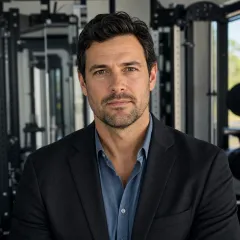
Marcus Feldman
Marcus Feldman is a commercial strength-equipment analyst covering selectorized machines, plate-loaded stations, Smith machines, functional trainers, power racks, benches, barbells, dumbbells, and cable systems. He applies ISO 20957-1 and ISO 20957-2 while comparing rated loads, stability, frame deflection, pulley ratios, cable travel, adjustment increments, guarding, entrapment points, fastener retention, and fatigue cycles. His guides help gym operators, coaches, facility planners, and procurement teams evaluate biomechanics, user capacity, floor layout, maintenance access, durability, and lifecycle value.