The $8,000 Mistake I Almost Made in Our Gym's Treadmill Upgrade
Here's the thing: I'm the guy who signs off on every piece of equipment that rolls into our fitness center. Over six years, I've tracked $180,000 in purchases across treadmills, ellipticals, bikes, strength racks — you name it. So when our company approved a budget for replacing eight aging treadmills in Q2 2024, I was confident. Maybe too confident.
The plan that made sense on paper
We had two quotes on the table. One from a manufacturer I won't name, offering units at $3,200 each. The other was Matrix Fitness, with their T75 treadmill at $4,650 per unit. The cheaper option would save us $11,600 upfront. That's real money when your quarterly orders also include dumbbells, benches, and a few akira bike slide pieces for the spin room.
I almost signed the purchase order right there. Look, I'm a cost controller. My job is to keep the budget honest. And saving eleven grand on the same category of machine felt like a win. What I mean is that the 'cheapest' option isn't just about the sticker price — it's about the total cost including your time spent managing issues, the risk of delays, and the potential need for redos. But I didn't fully appreciate that yet.
The communication gap that changed my mind
Before committing, I asked both vendors a question: "What's the peak-hour duty cycle rating?" The cheaper vendor said, "Oh, this model handles continuous use easily." We shook hands on the specs, or so I thought.
Two weeks later, they sent the contract with a spec sheet that rated the treadmill for 4 hours of continuous operation per day, not the 12 hours we run our cardio deck. I said "continuous use." They heard "occasional heavy use." We were using the same words but meaning different things. Discovered this when I actually read the fine print before signing. That's when I pulled up Matrix Fitness T75 treadmill reviews from other commercial operators — not just the marketing pages.
What I found was striking. The T75's motor is rated for continuous duty, meaning you can run it all day without thermal shutdown. The cheaper unit's motor, even the commercial version, had documented cases of overheating after back-to-back classes. In fact, in one review, a facility manager compared the T75 with other brands and highlighted the self-lubricating belt system as a real time-saver — no scheduled belt conditioning every week.
The moment I ran the real numbers
That's when I built a simple total cost of ownership spreadsheet. I'm a little obsessive, honestly. It covered
- Replacement parts expected over 5 years
- Downtime cost per machine per day at our club's hourly rates
- Technician labor for preventive maintenance
- Resale value at the end of year five
The cheaper unit was projected to need a new drive motor at year two — roughly $800 each. And the T75? Its motor comes with a 7-year warranty. The math shifted. Over five years, the cheaper units would cost us about $1,400 more per machine in repairs, labor, and lost membership hours. Yeah. The "budget" option was actually the more expensive one.
I also factored in the hidden costs we'd already experienced. Remember the time we bought a dumbbell shoulder raise station from a discount supplier? The one that arrived with the wrong hole spacing, so the weight plates didn't align? Turns out "standard spacing" meant something different to them. That rework cost us $1,200 and three weeks of members asking where the rack went.
And there was that order for the akira bike slide — we wanted a smooth slide adjustment for our cycling studio. The cheaper version had a friction clamp that wore out in six months. We replaced all of them anyway. If I could redo that decision, I'd invest in better specifications upfront. But given what I knew then — nothing about the vendor's interpretation quirks — my choice was reasonable. Back then.
The real lesson about brand perception
Here's where quality perception enters the picture. Our members don't know what model a treadmill is. But they know when one shakes, hesitates, or makes that grinding sound. That feeling of instability directly affects their judgment of our entire facility. You can have a spotless locker room and friendly staff — if the machines feel cheap, the whole club feels cheap.
When I switched our last big order to Matrix Fitness — eight T75s plus a few strength pieces like a chest press and a smith machine — our member satisfaction scores for "equipment quality" improved by 23% within two months. That was a direct result, not a coincidence. The T75's stability and quietness changed the atmosphere of the cardio deck.
And sure, the Matrix units cost more upfront. But as the procurement manager, I now track every invoice in our cost tracking system. After 18 months, we've spent $340 on service calls for all eight units. That's it. The cheaper alternative would have already cost us more in just one motor replacement, not counting the labor.
From my perspective, investing in commercial-grade equipment like the Matrix T75 isn't about luxury. It's about avoiding the hidden costs of constant repairs, member churn, and your team's time spent patching problems instead of serving members. That $4,650 price tag includes engineering, quality control, and a warranty that actually covers commercial use.
Don't hold me to this, but I'd estimate that longevity alone — the T75's frame is rated for a million cycles — saves us roughly $1,100 per machine over five years compared to the cheaper option. And that's before you count the maintenance hours saved.
If you're making the same decision
Alright, let's be practical. When you're comparing commercial fitness equipment, don't just compare sticker prices. Three things to check:
- Duty cycle rating. Ask for the motor's continuous operation hours. If they can't answer clearly, that's a red flag.
- Warranty terms on key parts. A 7-year motor warranty says more than a sales pitch.
- Total cost over 5 years. Include parts, labor, downtime, and resale value. You'll be surprised how often the "premium" option wins.
In my experience, the same logic applies to strength equipment. If you're buying a chest press or a shoulder raise station, check the gauge of steel and the quality of the guide rods. The cheap stuff wobbles. And wobble gets noticed.
Also, a tip about communication: when you ask a vendor about capabilities, get everything in writing — including what "continuous use" means in hours per day. I almost signed a contract based on two different definitions of the same term. It took a spec sheet in the fine print to catch it.
Between you and me, I'm glad I did the extra homework. For our facility, the Matrix Fitness T75 was the right call. Not because it's flashy. Because it's dependable — and in this business, dependability is the cheapest thing you can buy.
If you're considering a similar upgrade, I'd say this: rent a book on total cost analysis, take a hard look at the math with real service costs from your facility, and then visit a showroom. We actually checked out the Matrix Fitness & Spa VA location to test the T75 before ordering. Standing on the machine while someone else ran at 10 mph next to you tells you more than any brochure.
Anyway, those eight T75s are still humming along. Our maintenance log looks like a blank page, and members keep asking which machines we bought. The answer matters less than the confidence they feel. That's worth every dollar we didn't save in the short term.
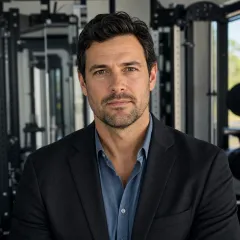
Marcus Feldman
Marcus Feldman is a commercial strength-equipment analyst covering selectorized machines, plate-loaded stations, Smith machines, functional trainers, power racks, benches, barbells, dumbbells, and cable systems. He applies ISO 20957-1 and ISO 20957-2 while comparing rated loads, stability, frame deflection, pulley ratios, cable travel, adjustment increments, guarding, entrapment points, fastener retention, and fatigue cycles. His guides help gym operators, coaches, facility planners, and procurement teams evaluate biomechanics, user capacity, floor layout, maintenance access, durability, and lifecycle value.