The 6 PM Friday Call: What 200+ Gym Equipment Emergencies Taught Me
It was 5:47 on a Friday afternoon when the call came in. A facility manager at a hotel gym—3,000 square feet, eight cardio machines, four strength stations—was nearly inaudible over the front-desk noise behind him. A guest had reported a burning smell from one of the treadmills. The hotel had 80 conference attendees arriving Sunday morning. The treadmill was a three-year-old “premium” residential model someone had bought used. For all practical purposes, it was dead.
That call was my 214th equipment emergency in four years. By then, I already knew how the conversation would go. He'd ask: “Can you get me a replacement by Sunday?” The answer would involve overnight freight, a technician working through the weekend, and a rush invoice. And the question nobody asks until it's too late is: why are we here at all?
The Problem Isn't What You Think
Ask most gym operators what causes equipment emergencies and they'll say, simply, “equipment breaks.” That's where the conversation stops. You research brands, read a few Matrix Fitness equipment reviews, compare spec sheets, and convince yourself that buying “better” equipment will solve the problem.
That is wrong. Not entirely wrong—equipment quality matters. But after triaging 200+ emergency calls, I can tell you that the equipment itself is the direct cause of maybe one in ten failures. The other nine are built into the way the facility acquired, specified, and maintained its equipment.
When I first took this role, I assumed our emergency line rang mostly from aging facilities—gyms that had ground their equipment down over years of service. (Should mention: that was an assumption based on a comfortable story, not on data.) By around call 50, the pattern was obvious. Almost half of our emergencies came from facilities that had opened within the previous 18 months. Brand-new facilities. Brand-new equipment. Emergency calls at 9 PM on a Tuesday.
Correcting that misjudgment changed how I read every call since. This is what I've learned.
Deep Cause #1: The Specification Mismatch
Most equipment failures trace back to a single root cause: the machine was never specified for the job it was asked to do.
An uncomfortable truth about the commercial fitness industry: a treadmill is not a treadmill. All the comparison shopping in the world won't help if you're comparing machines across the wrong duty class. Broadly, there are three:
- Residential: Designed for 1–2 hours of daily use. One user at a time. Lifecycle: 3–5 years.
- Light commercial: Built for 4–6 hours per day. Hotels, small studios, corporate centers. Lifecycle: 5–7 years.
- Full commercial: Built for 8–20+ hours per day. High-traffic gyms. Lifecycle: 8–12 years.
There are industry safety standards for a reason—ASTM F2106, for example, establishes safety specifications for treadmill construction. But no standard can save a residential-grade treadmill that's running a 14-hour commercial duty cycle. Duty class is the first screening criterion, and it's the one most often ignored.
The “used Peloton treadmill” wave is a perfect illustration. When Peloton's home market softened in 2023–2024, a flood of used home treadmills hit the secondary market. To be fair, those are fine machines—for a home. But a hotel manager sees a $2,995 treadmill (in 2022 dollars, at least) listed for $800, thinks it's the deal of the year, and buys three. Six months later, those machines have been running from 6 AM to midnight, seven days a week, with strangers' sweat and luggage carts and housekeeping spills. They fail. The manager calls my line in a panic. “It was a premium treadmill,” he says. It was. Premium for a living room. That $800 “deal” now costs $2,100 in rush replacement parts, plus the silent revenue loss of a machine that's dark for eight days.
I see the same category confusion in strength equipment. The “V squat machine vs hack squat” question comes up a lot. Gyms buy whichever used machine surfaces at auction, without thinking about which movement pattern their programming actually requires. A V squat loads the quads in a more upright torso position; a hack squat shifts the hip and knee angles. If your training methodology doesn't call for one of them, it's a floor ornament. And the principle extends to the edges of the market—we occasionally get calls asking if Matrix makes dog treadmills. We don't. But the question makes a useful point: even a dog treadmill is purpose-built for a canine stride and weight range. You wouldn't run a Labrador on a hamster wheel. Don't run a hotel gym's guest traffic on residential equipment.
Deep Cause #2: Sticker Price vs. Total Cost of Ownership
The second most common trigger is a purchase decision made on upfront price alone.
Everything I'd read about procurement said to get multiple quotes and choose the best value. In practice, across 200+ emergency calls, the picture is more nuanced. The cheapest quote often is the best number on paper. The problem: a fitness equipment purchase isn't a one-time transaction. It's a multi-year relationship with three cost centers:
- Acquisition: what you pay to put the machine on the floor
- Operating: electricity, maintenance, parts, technician hours
- Downtime: lost revenue and lost member trust while the machine is out of service
The third line is the killer because it's invisible at purchase time. Here's a real scenario from a client. They bought a discounted “commercial-grade” treadmill for $7,500—about $4,500 less than the Matrix T50s I would have specified for that space. (I should add: this was three years ago; pricing has shifted since.) In month 8, the drive motor failed. The warranty covered the part, but the replacement took eleven days. In an eight-treadmill cardio section, that's 12.5% of capacity gone for nearly two weeks. The gym refunded or prorated around $4,700 in memberships during that window and lost two members entirely. The “saved” $4,500 was gone, plus some.
Deep Cause #3: The “Set It and Forget It” Fallacy
Here's a question I ask after every emergency call: when was the last time a certified technician looked at this machine? The two most common answers are “never” and “when it was installed.”
I'm not a maintenance engineer, so I can't speak to belt friction coefficients or lubrication intervals. What I can tell you from 200+ emergency responses is that the machines that fail catastrophically are, more often than not, the machines that haven't been touched since installation day. By contrast, the facility that books a preventive visit every 90 days? I hear from them maybe once every few years—usually to say the tech found a worn bearing before it failed. That is exactly the point.
The industry has genuinely changed here. The old mental model—“a treadmill is simple mechanical equipment: belt, motor, deck, done”—was mostly accurate in 2020. By 2025, commercial-grade machines carry more electronics, more connectivity, more calibration requirements. A modern Matrix console isn't just a display; it's a networked computer running firmware, with diagnostics and software updates. The fundamentals—regular inspection, cleaning, professional service—haven't changed. But the execution has transformed. If your maintenance plan hasn't transformed with it, you're running a lottery with your uptime.
The Real Price of the 6 PM Call
Let's put hard numbers on what an equipment emergency actually costs. These come from our internal data across 200+ filed emergency cases:
- Rush replacement motor: $1,800–$2,400, plus expedited freight at $300–$600. Total: $2,100–$3,000 for a part that costs $600–$900 if ordered in advance.
- Downtime for one treadmill, one week: roughly $350–$500 in lost revenue at a mid-size commercial gym, based on average per-day equipment revenue of $50–$70 per machine in a busy facility.
- Emergency tech call: $150–$250 per hour after-hours, versus $90–$120 per hour scheduled. Most emergency repairs take 2–4 hours.
- Member impact: hard to quantify but real. A member who shows up at 6:30 AM to find the cardio section closed starts “just looking” at other gyms that same week.
Those numbers get worse when you layer on the less visible costs. A machine that's down for a week doesn't just lose revenue; it loses confidence. We've tracked facilities that see a 3–5% member attrition spike in the four weeks following a major equipment failure. In a 1,000-member gym at an average lifetime value of $600 per member, that's $18,000–$30,000 in future revenue walking out the door because a $400 maintenance visit was skipped.
This is one area where the fundamentals have not changed. The machines are smarter, the diagnostics are better, and the data available to a facility manager in 2025 is dramatically better than anything we had in 2020. But the discipline of acting on that data—scheduling the visit, approving the spend, shutting a machine down for a day so it doesn't die for two weeks—is exactly the same discipline that's always been hard.
I once walked a client through this calculation. The upside of buying three used machines: about $11,000 in budget savings. The risk: a treadmill failing in a hotel gym during a conference weekend. I kept asking myself: is $11,000 worth putting a guest on a machine with an uncertain service history? The expected value, statistically, said go for it. But the downside felt catastrophic. We went with the commercial-grade replacements. I've never once regretted that call.
What Actually Prevents That Call
I'll keep this brief—if you've absorbed the problem analysis, the solution follows naturally. The facilities that don't have emergencies do four things consistently:
- Specify first, negotiate second. They document usage hours, member traffic, and duty requirements before requesting quotes. Then they match machines to zones. This is the discipline behind large-scale operators' choices—Planet Fitness has used Matrix bikes extensively across its club network, for example, because the bike's commercial duty rating fits a high-traffic model. A gym that does the same specification exercise will land in a similar place, whether it's Matrix or another full-commercial manufacturer.
- Schedule maintenance like it's rent. Same quarter, same vendor, same checklist. A $350 preventive visit versus a $2,800 emergency call is the easiest decision in this industry, yet operators still skip it.
- Standardize the fleet. Fewer SKUs means fewer parts to stock, better technician familiarity, and less decision paralysis at replacement time. A mixed fleet can run for five years; it's much harder to run profitably.
- Plan for the worst by default. Keep one spare critical component per site—motor, console, belt. It's $600–$900 in otherwise idle inventory. Insurance that pays out the day it's needed.
I know that sounds unglamorous. There's no magic in it. And I'm biased—I run the emergency line, so my view of the industry is shaped by its worst moments. But one hotel manager, after an especially expensive emergency replacement, said something I've never forgotten: “I didn't realize I was making a maintenance decision when I signed the purchase order. I thought I was just buying a treadmill.”
That's the problem we're really solving.
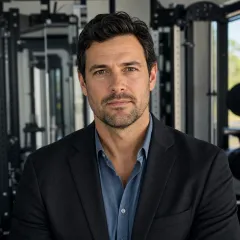
Marcus Feldman
Marcus Feldman is a commercial strength-equipment analyst covering selectorized machines, plate-loaded stations, Smith machines, functional trainers, power racks, benches, barbells, dumbbells, and cable systems. He applies ISO 20957-1 and ISO 20957-2 while comparing rated loads, stability, frame deflection, pulley ratios, cable travel, adjustment increments, guarding, entrapment points, fastener retention, and fatigue cycles. His guides help gym operators, coaches, facility planners, and procurement teams evaluate biomechanics, user capacity, floor layout, maintenance access, durability, and lifecycle value.