Setting Up a Commercial Gym Floor? Here's a 5-Step Equipment Checklist (From Someone Who's Done 50+ Installations)
-
Step 1: Map Your Floor (And Be Brutal About It)
-
Step 2: Prioritize the 'Always-On' Equipment
-
Step 3: Understand the 'Muscles Worked' (It Saves You Money)
-
Step 4: Don't Forget the 'Easiest' User (The Beginner)
-
Step 5: Lock in the Service and Warranty Details
-
Things I've Learned to Avoid (The Mistakes)
If you're opening a hotel gym, a boutique fitness studio, or upgrading a corporate wellness center, the equipment list can feel overwhelming. You've got treadmills, bikes, cable machines—and a budget that's not infinite.
I've been doing this for a while. In the last two years alone, I've coordinated equipment selection and layout for 50+ gym installations, ranging from a 300 sq ft hotel room to a 15,000 sq ft athletic club. And I've seen the same mistakes happen again and again.
Here's a checklist I wish someone had handed me before my first big install. It's not a review of everything Matrix makes—it's a process. Follow these five steps, and you'll end up with a functional, durable, and member-friendly gym.
Step 1: Map Your Floor (And Be Brutal About It)
Don't start with equipment. Start with a tape measure and a piece of graph paper.
Before you even look at a spec sheet, you need to know two things:
- The total usable floor space (minus columns, emergency exits, and that weird corner the architect put in 1978).
- The power and data outlet locations. For Matrix equipment, like the T50 Xir treadmill or the Performance Series bikes, you need dedicated circuits. Re-wiring after concrete is poured? That's a $5,000 mistake I've seen twice.
Here's what most people miss: They plan for equipment dimensions, but forget functional space. A treadmill needs about 3 feet behind it for a fall zone, and a preacher curl bench needs enough room for someone to sit and extend their legs. The minimum? I usually add 2-3 feet on every side of a piece of equipment for circulation.
Pro tip from a mistake I made: We once installed a Matrix Ascent Trainer in a space where the ceiling height was exactly 8 feet. Technically, the machine fit. But any tall user felt claustrophobic. We moved it. Plan for ceiling height if you're using any stair climber or functional trainer.
Step 2: Prioritize the 'Always-On' Equipment
Cardio equipment runs almost constantly in a commercial gym. It needs to be commercial-grade, no exceptions.
This is where a brand like Matrix makes sense. Their T50 Xir, for example, is built for 12+ hours of daily use. If you're considering a "light commercial" or "home gym" grade treadmill for a hotel gym? Don't. I've had to replace a motor on a "commercial-grade" treadmill from a different brand after 14 months. The member experience suffered, and the repair cost ate into the savings.
For a standard commercial gym, I'd allocate 60-70% of your budget to cardio and the core strength stations—squat racks, leg presses, and Smith machines. These are your high-traffic items. Fill in the rest as you grow.
My rule of thumb: If a machine will be used by 10+ people a day, buy commercial. For that satellite corner with a mat and some dumbbells? You can go with a mid-range option.
Step 3: Understand the 'Muscles Worked' (It Saves You Money)
You don't need twenty different machines to cover the major muscle groups. You need the right five.
I once helped a hotel plan their gym. The original list had a bicep curl, tricep extension, and a shoulder press machine. That's three stations for essentially the same action. Instead, we consolidated to a single functional trainer (like Matrix's versatile cable column) which can do all three with minor setup changes.
Here's something I've learned you should always check: what muscles a specific exercise works. It sounds basic, but I've seen buyers assume a 'leg press' is a quad-only exercise. It's actually a compound movement that heavily recruits the glutes and hamstrings depending on foot placement. Knowing this helps you balance your training zones.
For example, if you already have a squat rack and a leg press, you probably don't need a dedicated leg extension machine. The squat rack (using a bench) or a proper leg press, like the Matrix Leg Press, will create enough leg volume for most commercial setups.
Similarly, with a 'DB chest press' vs a 'Smith machine flat press' vs a 'chest press machine'—they all work the same muscles. Do you need three? Probably not. Pick one solid, durable option.
Step 4: Don't Forget the 'Easiest' User (The Beginner)
A gym's success isn't driven by the powerlifters. It's driven by the people who are scared of the power rack.
If you're setting up for a hotel or a corporate center, or even a small commercial gym, your most frequent member might be someone who's never used a squat bar. They don't care about the nuances of the 'leg press muscles worked.' They want something that feels safe and a little bit guided.
That's where the best exercise bike for beginners comes in. I always set up at least two recumbent or upright bikes that are simple. No complex programs. Just a seat adjustment and a resistance knob. Matrix makes a solid recumbent bike (the R Series) that's incredibly stable and quiet.
Also, think about the functional trainer area. A dual-adjustable pulley (DAP) is a staple. But for a beginner, watching a video on 'how to set up a cable crossover' is intimidating. Add a simple shoulder press station or a chest press machine (like the Matrix Aura) right next to it.
My experience: We added a dedicated 'beginner's zone' with two bikes, one elliptical, and a simple cable machine to one hotel gym. Within 3 months, the average duration of visit increased by 25% compared to the previous setup.
Step 5: Lock in the Service and Warranty Details
The best equipment in the world is useless if you can't get it fixed.
I made this mistake once. We bought a bundle from a distributor because the price was great. Six months later, a treadmill belt started slipping. The distributor's service team had a lead time of 3 weeks. For a gym with daily traffic? Unacceptable.
When you finalize your order for Matrix equipment or any brand, ask for—and get in writing—the average service response time and the parts availability. Commercial brands like Matrix have a strong network, but you need to confirm it for your region.
For a recent project, we specified a service guarantee of 48 hours for critical repairs. We paid a small premium (maybe 3% on the total order) but it prevented a potential $50,000 penalty clause for downtime at a major corporate center.
Things I've Learned to Avoid (The Mistakes)
Over the years, I've built a small list of things that consistently go wrong:
- Underestimating shipping logistics: A treadmill isn't a box of pens. Make sure your delivery point has a loading dock or a large freight elevator. I've seen a T50 Xir sit in a lobby for 3 days because the elevator was too small.
- Ignoring the 'Matrix Fitness and Spa' listing: If you're a hotel or spa, make sure your equipment is listed accurately on your website and booking platforms. We helped a client who bought beautiful new cardio equipment but their website still listed the old, inferior models. The guests were unimpressed.
- Buying a 'bundle' without understanding the bundle: Some distributors offer big packages. Check if the 'DB chest press' set is rubber hex or steel plates? Are the barbells included? I've seen bundles that look great until you realize you need to buy the plates separately.
Honestly, I'm not sure why some projects go perfectly and others hit every snag. But if you follow this checklist—map the floor, prioritize the core, understand the exercise, plan for beginners, and lock down service—you'll avoid the vast majority of issues.
I've done about 50 of these now. If you're working with a luxury or ultra-budget segment, your experience might differ significantly. But for the standard commercial setup? This works.
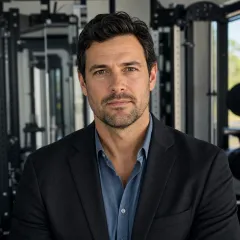
Marcus Feldman
Marcus Feldman is a commercial strength-equipment analyst covering selectorized machines, plate-loaded stations, Smith machines, functional trainers, power racks, benches, barbells, dumbbells, and cable systems. He applies ISO 20957-1 and ISO 20957-2 while comparing rated loads, stability, frame deflection, pulley ratios, cable travel, adjustment increments, guarding, entrapment points, fastener retention, and fatigue cycles. His guides help gym operators, coaches, facility planners, and procurement teams evaluate biomechanics, user capacity, floor layout, maintenance access, durability, and lifecycle value.