Why "Cheap" Gym Equipment Costs the Most: A Procurement Manager's View
I've been managing equipment procurement for our three-location gym chain for six years. In that time, I've signed off on nearly 180 equipment orders—actually, let me check our system before I say that. Closer to 170. Treadmills, ellipticals, indoor cycles, rowers, a functional trainer machine or two, strength racks. And I've made mistakes with all of them.
Here's the conclusion I've reached after all those orders and six years of tracking every dollar: in commercial fitness equipment, the lowest quote is almost always the most expensive purchase you'll make. Not sometimes. Almost always. I can back that up with my procurement data.
The Sticker Price Lie
Let's walk through a real example from my books. In Q2 2024, I compared quotes from five vendors for a 40-piece cardio fleet replacement. The lowest bid came in $18,000 under the Matrix Fitness proposal. On paper, that looked like an easy win—same number of machines, more money left over.
Then I ran the total cost of ownership numbers. That's a habit I picked up in 2023 after getting burned on a "great deal" that turned out to be nothing of the sort.
Here's what actually happened with the discount units:
- They broke down twice as often in year one. We spent $6,200 in service calls.
- Warranty turnarounds averaged 18 days. That's 18 days of machines collecting dust instead of being used by members.
- By the end of year two, we'd replaced 14 of the 40 units. That cost $31,500.
So the "cheap" vendor cost us $13,500 more than the Matrix quote would have—before we even value the member experience damage. That $18,000 in upfront savings became a $31,500 problem.
Why does this matter? Because this pattern repeats. In my 2023 spend audit, I found that 23% of our budget overruns came from maintenance and repairs on discount-priced equipment. Not facility costs. Not staffing. Broken machines we'd purchased to save money.
Member Experience Is a Financial Metric, Not a Soft Value
Here's the second pillar of my argument: what members feel when they use your equipment directly affects revenue.
Take the indoor cycling studio at our flagship location. We installed Matrix Fitness ICR50 cycles there in 2022. That studio's 12-month retention rate is 68%. Compare that with location two, which uses a budget-friendly brand of bikes: 51% retention.
Now, I'm not a statistician, so I can't definitively isolate equipment as the single driver there. But our exit interviews reveal a clear pattern. Members who cancelled cited "equipment that feels worn" or "bikes that wobble" three times more often at location two. That's not coincidence—that's a product experience problem.
And this ties directly into one of the most common questions in fitness: is elliptical better than walking? I'm not a kinesiologist, so I can't speak to the physiological comparison. But from a procurement perspective, the economic comparison matters more. A member can walk anywhere for free. They pay us $50+ a month to use our equipment. The moment an elliptical feels flimsy or noisy, that member starts reasoning that the park is just as good—and we lose recurring revenue over a machine that didn't feel solid enough.
When a member says "that machine feels cheap," they're not being a snob. They're delivering a financial warning.
The Technology Trap Nobody Talks About
Here's an argument that surprises people when I talk to procurement colleagues: bad technology integration costs more than no technology at all.
Let me explain. In March 2025, I pulled a month's worth of member feedback across all three locations. 17% of equipment-related complaints were about connectivity—not resistance, not comfort, not the quality of the workout. Connectivity.
Members show up with their own tech ecosystems. The Sony headphones app, AirPods, smartwatches. They expect the machines to play nice with those tools. When a machine's Bluetooth pairing is a battle every single session, the member blames the gym, not the console.
We witnessed this directly with a mid-priced functional trainer machine we bought for one location. It came with a "smart" attachment meant to sync workout data to a companion app. It connected successfully maybe 40% of the time. Members got frustrated, some stopped using the attachment entirely, and eventually we disabled the feature. We paid extra for a feature that became a liability.
This is where I think Matrix Fitness earns its price premium. The technology on their equipment actually works. The Matrix Fitness rower pairs with apps effortlessly—members don't have to wrestle with a connection every session. And the Matrix Fitness functional trainer at our flagship? Zero connectivity complaints since install. Not one.
I should correct myself there—we did have one console software issue on a Matrix treadmill in 2024. A remote update fixed it within 48 hours, but I don't want to pretend the brand is flawless. No equipment brand is.
"But We Don't Have the Budget"
I know what you're thinking. It's the same thing I hear from procurement folks at industry events: "All that is fine in theory, but my budget only stretches so far." I get it. I've lived it.
But my own experience says the cheapest route is the more expensive route in disguise. After I implemented a TCO review policy for every equipment order above $2,000, our maintenance and repair spend as a percentage of total equipment cost fell 31% in 2024. We didn't start buying the most expensive option for everything. We just stopped buying the lowest-priced option without calculating what it would cost per year over its useful life.
The Matrix Fitness ICR50 is a perfect case study. You can find alternative indoor cycles for half the price. But those lower-priced bikes typically last two years under commercial use before frames loosen, resistance systems degrade, and repairs exceed replacement value. We're now in year four with our ICR50 fleet, and it's still running strong. Annualized cost? Lower than the "cheap" bike.
That said, I'm not going to claim this applies to every scenario on earth. If you operate a hotel gym that sees thirty guests a week, you don't need high-volume commercial equipment. The usage intensity doesn't justify the premium. I can only speak to high-traffic commercial gyms with heavy daily usage. If your situation is different, do your own TCO math—that's exactly the point.
Stop Treating Price as the Price
It took me four years and roughly 150 procurement decisions to understand something that now seems obvious: quality isn't an upsell. It's a cost-reduction strategy.
I do not dispute that Matrix Fitness equipment costs more than some alternatives upfront. What I dispute is the assumption that upfront price is the decision metric. The real metric is cost per usable hour over the equipment's lifetime, including maintenance, downtime, and member retention impact.
When you calculate that number, the "affordable" option often turns out to be the luxury you couldn't afford. And the higher-priced brand becomes the bargain.
Prices as of early 2025—verify current quotes with your vendors before any purchase. But the principle doesn't expire: in commercial fitness equipment, value beats price.
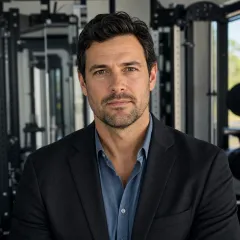
Marcus Feldman
Marcus Feldman is a commercial strength-equipment analyst covering selectorized machines, plate-loaded stations, Smith machines, functional trainers, power racks, benches, barbells, dumbbells, and cable systems. He applies ISO 20957-1 and ISO 20957-2 while comparing rated loads, stability, frame deflection, pulley ratios, cable travel, adjustment increments, guarding, entrapment points, fastener retention, and fatigue cycles. His guides help gym operators, coaches, facility planners, and procurement teams evaluate biomechanics, user capacity, floor layout, maintenance access, durability, and lifecycle value.