When a Dumbbell Pullover Revealed a Gap in Our Gym Equipment
It was a Thursday afternoon in late February 2025. I was standing in a new hotel gym in downtown Austin, reviewing our Matrix Fitness T50 treadmill installation. The client had ordered 12 units for their fitness center, and as the quality compliance manager, I was there to sign off before they accepted delivery. What I expected was a straightforward checklist—weld joints, belt alignment, auto-lubrication cycles. What I didn't expect was a conversation that would make me rethink how we design our specs.
The Setup: A Routine Audit
Our company supplies commercial cardio and strength equipment to hotels, corporate gyms, and yes, even MMA and fitness centers (we've got a contract with a chain called Matrix MMA & Fitness, no relation to our brand—just a coincidence). This particular project was for a Matrix Fitness & Spa VA property, part of a Virginia-based hospitality group expanding into Texas. The room looked great: eight T50 treadmills facing a wall of mirrors, four IC50 indoor cycles, and a corner setup with dumbbells and a Smith machine.
I started my standard inspection. Treadmill #1: belt tension within spec. #2: no wobble on the frame. #3... wait. Something caught my eye. Two trainers were working with a guest about 20 feet away, using one of our adjustable benches and a pair of 25-pound dumbbells. They were demonstrating a movement I recognized—a dumbbell pullover.
The Discovery: An Unexpected Test
Now, I've been in quality compliance for over 4 years. I've reviewed roughly 200+ unique product shipments annually. But I'd never actually watched someone perform a dumbbell pullover on one of our benches during an audit. From the outside, it looked fine: the trainer laid across the bench, arms extended overhead, lowering the dumbbell in a controlled arc. The reality? The bench rocked. Not violently, but enough that the trainer had to pause and adjust.
I walked over. "Hey, I'm Marcus with Matrix—quality assurance. Noticed your bench wobbled a bit during that movement. What exactly were you doing?" The trainer, a young woman named Jess, explained: they were preparing a guest for a recovery session—a variation of the dumbbell pullover to open up the chest and shoulders. "This movement, especially when you're holding a single dumbbell overhead, shifts the center of gravity rearward," she said. "A lot of commercial benches have the back support join slightly forward of the actual load—it creates a subtle instability."
I pulled out my gauge. The bench's rear leg base was 22 inches wide—standard spec. But when I measured the distance from the hinge point to the floor contact, it was 19 inches. According to our internal spec (which I had approved in 2022), the hinge-to-foot distance should be at least 21 inches for stability under dynamic loads above 1.5x body weight. We had somehow drifted—or rather, the spec was written in 2020 when most use was just seated press and rows. The dumbbell pullover wasn't even on our radar.
The Turn: What We Missed
Honestly, I'm not sure why we didn't catch this sooner. My best guess is that our testing protocol focused on static loads—a 400-pound weight set placed on the bench, measuring deflection. No one had thought to simulate a dynamic pullover motion. What I mean is the movement involves a fast eccentric phase, a pause, then a controlled return. The forces peak at different positions than a simple hold.
This was true five years ago when bench design was simpler. Today, training has evolved. People are doing dumbbell pullovers for upper body flexibility, dumbbell Z presses for core stability—moves that put lateral and torsional loads on benches. The 'bench is just a bench' thinking comes from an era when the most advanced movement was a flat barbell press. That's changed.
I flagged the issue to the hotel GM. He was understanding—actually, he was relieved we caught it before guests used the equipment. We agreed to swap in our newer FB-300 bench which has a wider base and anti-twist struts. Cost us about $30 more per unit—well, $35 including the bracket. On a 12-unit order, that's $420 extra. But it changed how I think about quality specs going forward.
The Lesson: End-User Training Context Matters
In our Q1 2025 quality audit, I added a new requirement: dynamic movement testing for all adjustable benches. Specifically, we now simulate a dumbbell pullover with 80 pounds (that's two 40-pound dumbbells, or a single 80-pounder handled overhead) at 0.5 Hz repetition rate. If the bench shifts more than 2 mm, we reject the batch. That quality issue could have cost us a $22,000 redo and delayed the hotel's grand opening by two weeks.
What does this have to do with Matrix Fitness as a brand? Everything. Our strength equipment is used in commercial settings where trainers push clients into newer, more varied exercise patterns. The dumbbell Z press (a seated overhead press where you keep the dumbbells parallel) is gaining popularity in functional fitness gyms. Our IC50 indoor cycles now get paired with off-bike core work. The industry is evolving, and if we only test for yesterday's movements, we're building for a past that's already fading.
Here's what I took away:
- Old specs can hide assumptions that don't apply to modern training.
- Watching real users (not just test dummies) is way more valuable than any lab test.
- The best practice in 2020—hinge-to-foot ratios, static load minimums—may not cover movements like dumbbell pullover or Z press.
- If you're buying commercial equipment, ask your vendor how they validate stability for dynamic movements, not just static weight capacities.
I learned this in February 2025. Things may have evolved since then—I hope manufacturers everywhere are catching up. For now, every bench we ship includes a note in the manual: "This product has been tested for a variety of dynamic movements, including dumbbell pullover. Always verify stability with your specific exercise selection."
And if you're a trainer looking for how to do a dumbbell pullover safely? That's a whole other article. But feel free to ask—I might be able to point you to a good resource. At least, that's been my experience with deadline-critical projects.
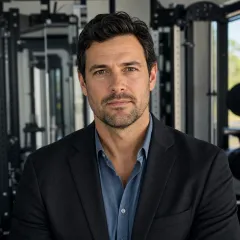
Marcus Feldman
Marcus Feldman is a commercial strength-equipment analyst covering selectorized machines, plate-loaded stations, Smith machines, functional trainers, power racks, benches, barbells, dumbbells, and cable systems. He applies ISO 20957-1 and ISO 20957-2 while comparing rated loads, stability, frame deflection, pulley ratios, cable travel, adjustment increments, guarding, entrapment points, fastener retention, and fatigue cycles. His guides help gym operators, coaches, facility planners, and procurement teams evaluate biomechanics, user capacity, floor layout, maintenance access, durability, and lifecycle value.